
A patient once told her sleep doctor that she’d had a “bad night” — even though she felt fine. She hadn’t woken up groggy. She wasn’t dragging through her afternoon. But her ring had told her, in a little chart with a low score attached, that her sleep had failed her. So she believed it.
That story is close to the one that gave this problem its name. In 2017, researchers at Rush University Medical College and Northwestern’s Feinberg School of Medicine described patients who had become so fixated on their sleep-tracker data that the fixation itself was disrupting their sleep. The patients didn’t necessarily meet the clinical picture of insomnia. What they had was a new kind of worry: anxiety about whether their sleep was correct. The researchers called it orthosomnia — from the Greek roots for “straight” or “correct” and “sleep” — and published the case series in the Journal of Clinical Sleep Medicine.
Nine years later, that case study reads less like a curiosity and more like an early warning.
What a new national survey found
A 2026 survey of more than 2,000 U.S. adults, conducted by the mattress company Naturepedic in partnership with the research firm North Star Inbound and reported this week by Stacker, found that 64% of Americans track at least one aspect of their health every single day. Sleep is one of the most closely watched categories: 60% of people track sleep duration and 47% track sleep quality, putting sleep among the five most-monitored metrics in the country, alongside weight, steps, and water intake.
The same survey found something less comfortable sitting alongside all that data collection. Fifty-eight percent of respondents said they feel overwhelmed by the sheer volume of health and wellness advice circulating online, and more than one in three said they had stopped tracking a health metric altogether because it was making them feel worse, not better. The researchers gave this pattern a name too: optimization anxiety, the stress that builds when a tool meant to help starts to feel like one more thing to get right.
Sleep tracking sat right at the center of it. The survey’s authors pointed to a 2024 study in the journal Brain Sciences, which surveyed 523 adults and found that, depending on how strictly the condition was defined, somewhere between 3% and 14% of the general population showed signs of orthosomnia. Roughly a third of that study’s participants used a sleep-tracking wearable regularly, and that group reported measurably higher sleep-related anxiety than people who didn’t track at all.
Put those two data points next to each other — most Americans now track their sleep, and a meaningful slice of trackers develop anxiety specifically because of it — and the mechanism becomes easy to see, even if you’ve never heard the word orthosomnia before.
Why the number can matter more than how you feel
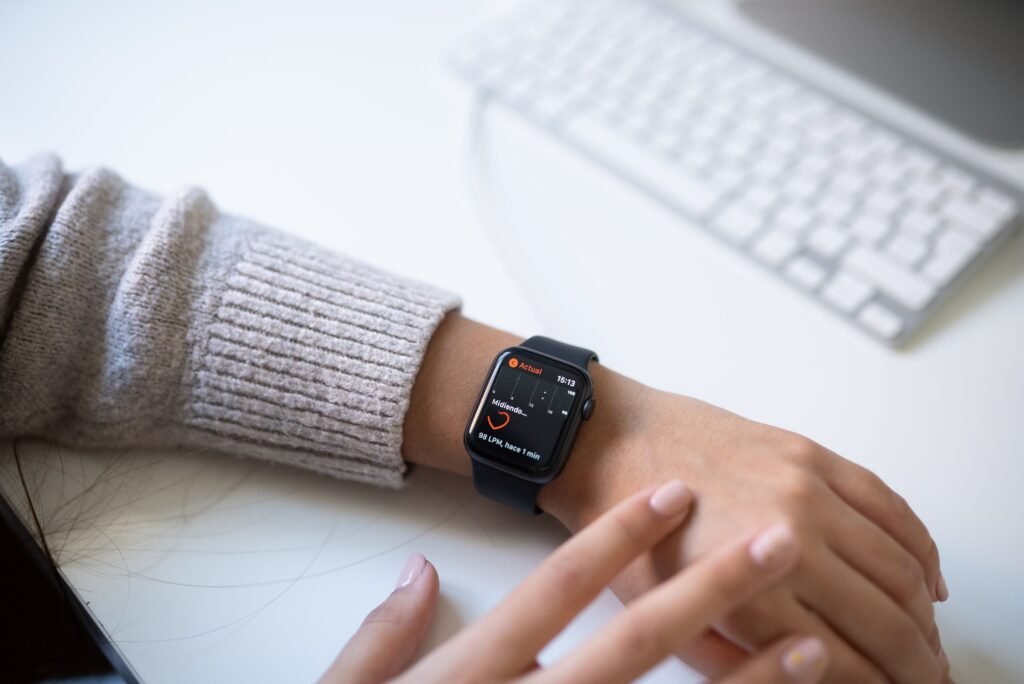
Here’s the part that trips people up: your wearable isn’t lying to you, exactly. An Oura Ring, an Apple Watch, a Whoop band — these devices genuinely estimate something about your sleep using movement, heart rate, and sometimes temperature or blood oxygen. The problem isn’t that the number is fake. It’s that the number becomes the thing you trust more than your own body.
That’s a subtle but important shift. Historically, people knew they’d slept badly because they felt tired, irritable, or foggy. Now it’s possible to wake up feeling perfectly rested and still spend the first five minutes of your day feeling anxious because an app disagrees with you. The Sleep Foundation describes this as a kind of unhealthy preoccupation with tracker data — one where people start changing their behavior (going to bed earlier than they’re tired, lying in bed longer to “get the numbers up,” canceling plans to protect a streak) in service of a score rather than in service of how they actually feel.
It’s also worth saying plainly: consumer sleep trackers are not clinical instruments. They’re good at detecting that you’re asleep; they’re considerably less precise at identifying exact sleep stages or distinguishing light wakefulness from deep rest. A score that dips a few points on a given night often reflects the limits of the sensor as much as anything happening in your nervous system. Treating it as a verdict on your health is where the trouble tends to start.
This will sound familiar to anyone who has woken up at 3 a.m. with a racing mind and reached for their phone to check the time, only to feel their heart rate climb further at the sight of the clock. Orthosomnia is a specific, tracker-driven version of a broader pattern: the more closely we monitor something meant to happen automatically, the more we can interfere with it happening at all.
What actually helps
The good news is that none of this means wearables are the enemy. For plenty of people, a sleep tracker genuinely surfaces useful patterns — a correlation between late caffeine and restless nights, or a nudge to get to bed thirty minutes earlier. The goal isn’t to throw the ring in a drawer forever. It’s to change your relationship with what it tells you.
A few things clinicians and sleep researchers tend to agree on:
Treat your score as a trend, not a daily grade. One night’s number tells you very little; a month of numbers can tell you something real. Checking the app once a week instead of the moment you open your eyes removes a lot of the emotional charge.
Let how you feel outrank what the app says. If you woke up rested, you were rested — regardless of what a percentage suggests. Bodies are not required to agree with algorithms.
Try a tracker-free stretch. A week or two without checking sleep data is a reasonable, low-stakes experiment for anyone who notices they’re more anxious about their sleep since they started tracking it than before.
Bring it to therapy if it’s not letting up. If sleep-related worry is spilling into your days, disrupting your ability to fall asleep, or driving compulsive checking behavior, that’s a pattern worth naming out loud to a therapist. Cognitive behavioral therapy for insomnia (CBT-I) is a well-supported, structured approach for exactly this kind of sleep anxiety, tracker-driven or not, and it doesn’t require you to already have a diagnosis to be worth exploring.
There’s a broader lesson here that goes beyond sleep. A lot of us have quietly adopted the belief that if something can be measured, it should be optimized — and that if it isn’t improving on a graph, it isn’t real progress. Anyone who has wondered whether therapy is actually working has probably felt a version of this same pull: the temptation to reduce something as complicated as rest, or healing, or wellbeing, into a single number you can watch go up or down. Sometimes the more useful question isn’t “what does the score say,” but “how do I actually feel” — and trusting that answer, even when it doesn’t come with a chart attached.
This article is for general informational purposes and isn’t a substitute for personalized medical or psychological advice. If sleep problems or anxiety are significantly affecting your daily life, a doctor, sleep specialist, or licensed therapist can help you figure out what’s actually going on.